
Brown China-mark

Elophila nymphaeata
Brown China-mark
63.114 BF1345
[= Nymphula nymphaeata]
Wingspan 22-30 mm.
The group of moths known as China-marks are unusual in that their larvae are entirely aquatic, feeding on water plants.
This species is quite variable, and some examples are quite dark and dull-looking, whereas others can have delicately-patterned white patches and streaks.
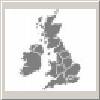
The moth flies in July and August, and the species is fairly common around ponds, lakes and canals throughout Britain.
Flight period
| Month | Records |
|---|---|
| January | 6 |
| February | 1 |
| March | 2 |
| April | 6 |
| May | 53 |
| June | 1,165 |
| July | 1,830 |
| August | 1,378 |
| September | 314 |
| October | 2 |
| November | 0 |
| December | 1 |
More details
Larva:
Foodplant: All year, July - June, on leaves of Potamogeton. Also on other aquatic plants, such as Sparangium spp.and Hydrocharis. First instar in gallery mine. Thereafter, larva either in a free bivalved case of two ovals of leaf material, or under an oval cover of excised leaf material on the underside of the leaf. In winter, the larva is in a gelatinous hibernaculum within the latter habitation, even if the leaf is decaying and submerged.
Over-wintering larva:
Length: larva about 7 mm, case about 12mm. Head: Shagreened brown ochre. Frons paler. Epicranial spheres finely edged blackish. Mouthparts reddish brown. Stemmata black, connected by curved blackish band.
Prothorax (T1): Anterior border whitish translucent and shagreened. Prothoracic shield strongly shagreened olive-brown ochre, surrounded by broad blackish border. Divided by very fine faint pale medial line.
Thoracic legs: Translucent light brown.
Body: Shagreened, translucent dull yellowish green. When feeding, viscera visible as reddish brown dorsal line, and frass may show grey in posterior segments.
Spiracles: Very small. Peritreme black.
Pinacula: Indiscernible. Very fine dark setal spot. Setae: October; very fine, transparent almost colourless. February; brown basally, fading colourless distally.
Anal plate: As rest of abdomen with several brown spots which are barely discernible in October, but more visible in February.
Prolegs: Concolorous with body. Crochets prominent, dark brown. Arranged in two transverse rows capable of being closed together in a gripping line.
Late instar larva Buckler shows body more brownish, and prothoracic shield with dark central area each side of medial line.